Governance for external guests
Seamless extends governance beyond internal collaboration by providing structured and secure management of external guests. This includes invitation workflows, naming and lifecycle policies, guest self-service, and automated removal of non-compliant guests.
Users can invite external guests through self-service while Seamless ensures that security, compliance, and lifecycle rules are enforced automatically.
Guest templates
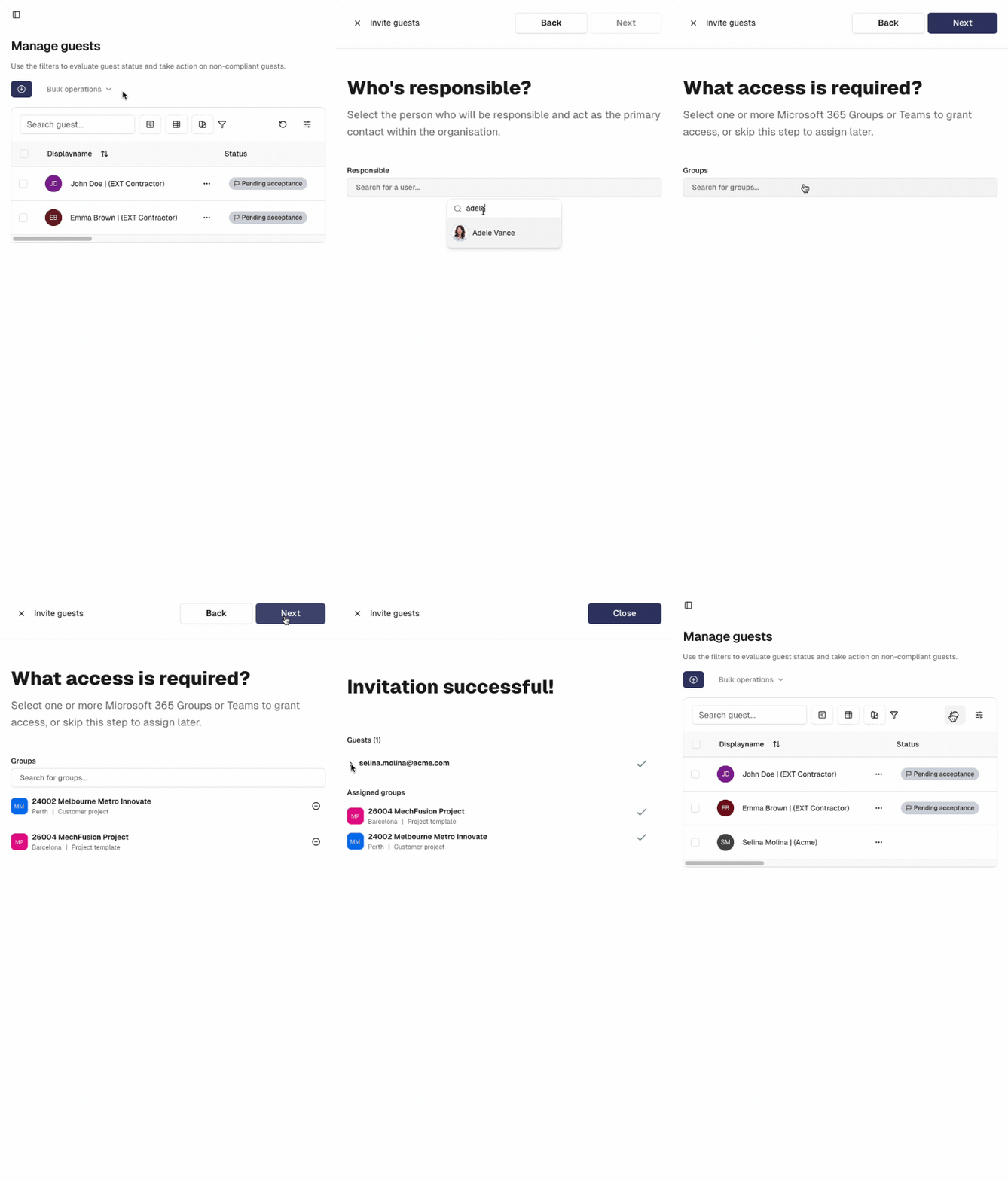
Guest templates define how external guests are invited and managed in Microsoft 365. When users invite guests using a template, the configured naming and lifecycle policies are applied automatically.
This ensures that all guest accounts follow a consistent and recognizable structure throughout their lifecycle.
Guest naming policies
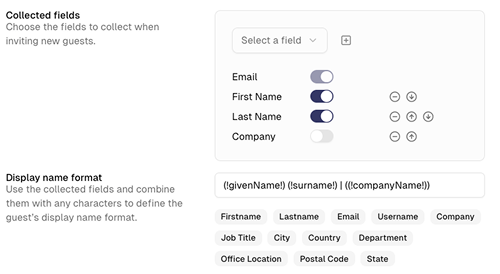
Naming policies automatically enforce standardized names for guest users. Guest names remain consistent throughout their entire lifecycle, making it easy to distinguish internal users from external guests across Microsoft 365.
Guest lifecycle management
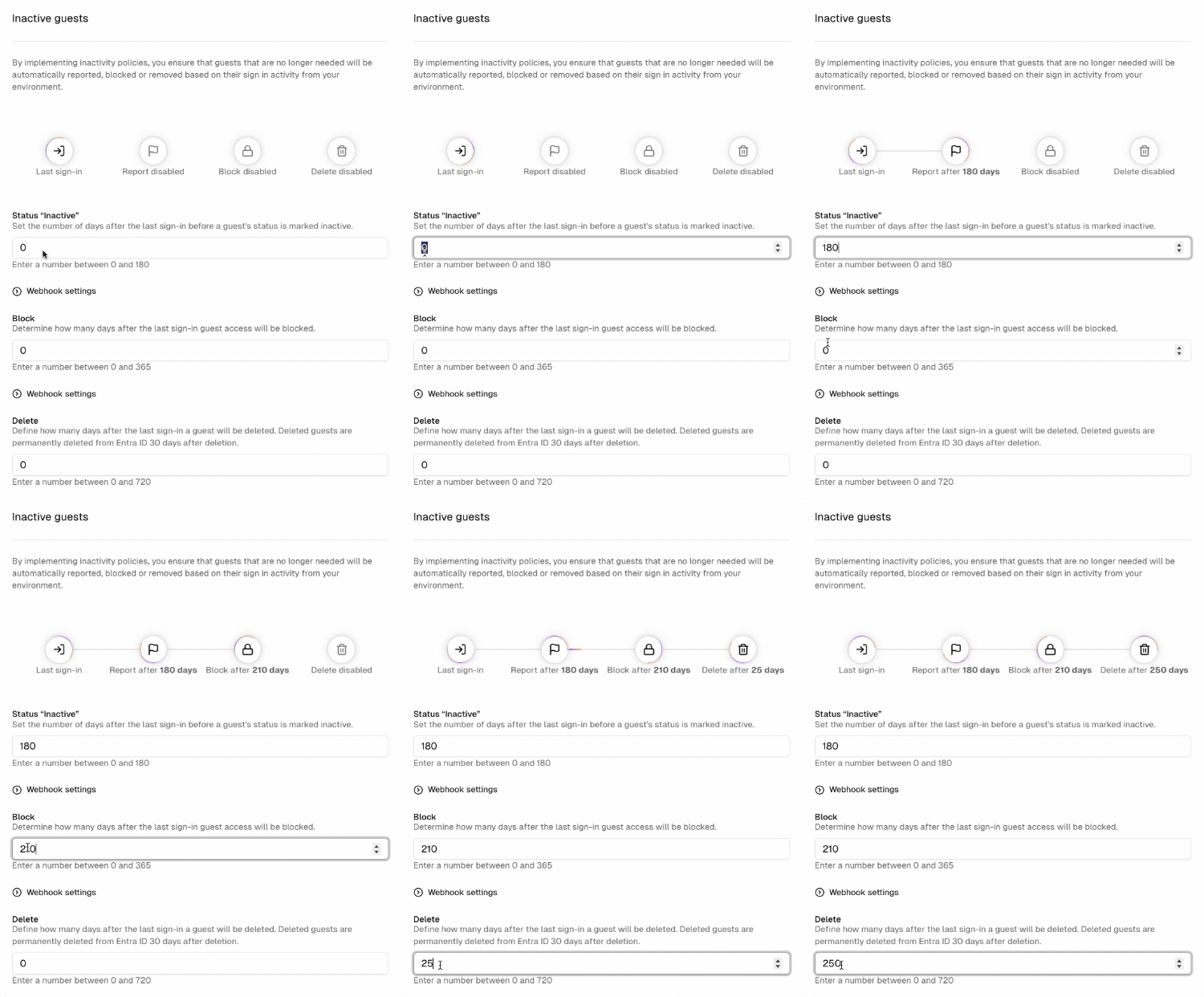
Lifecycle policies ensure that guest access remains compliant over time. Guests are automatically removed if they:
- Do not redeem their invitation
- Do not sign in for a defined period
- Fail access renewal requirements
This keeps your tenant clean and ensures that guest access ends when a collaboration or project is completed.
Guest self-service portal
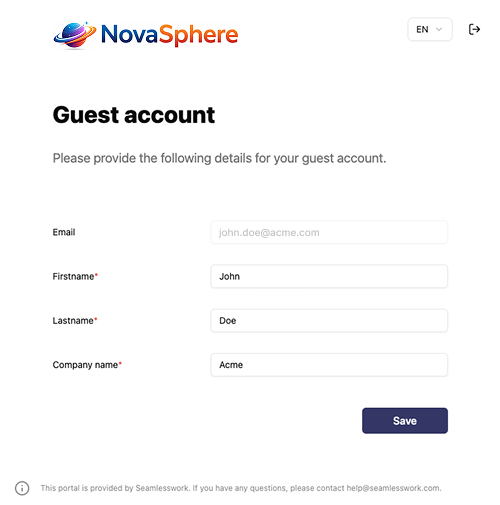
The guest portal provides a self-service experience for external users to manage and update their access information. It can be embedded into the invitation process to:
- Set up guest access
- Collect missing or required information
- Keep guest data up to date during ongoing collaboration
Unified governance approach
By combining governance for Teams and external guests, Seamless delivers a unified, scalable governance framework for structured and efficient collaboratoin in Microsoft 365.
Organisations benefit from:
- Secure and compliant user self-service
- Consistent structures and naming standards
- Automated lifecycle and cleanup processes
- Reduced administrative overhead
- Improved collaboration without sacrificing control